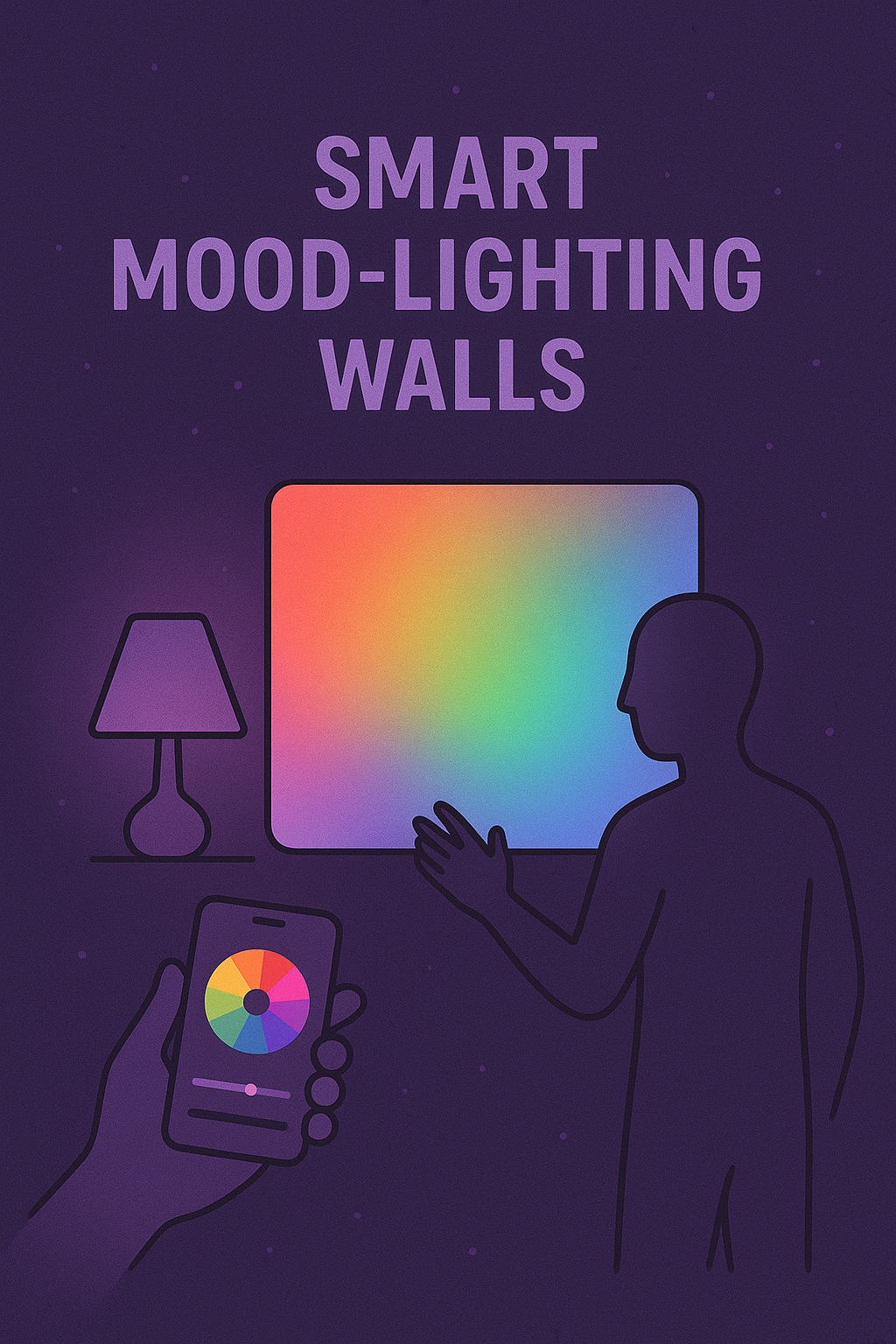
Smart mood-lighting walls are walls or surfaces that change color, brightness, or patterns in response to environmental stimuli, user input, or pre-programmed settings. They combine innovative paints, coatings, LEDs, and sensors to create dynamic, interactive environments.
Purpose
Enhance interior aesthetics and mood.
Improve well-being and productivity through light and color therapy.
Enable adaptive ambiance in residential, commercial, and public spaces.
Integrate smart home and IoT systems for automation and personalization.
Core Technologies
Thermochromic Paints
Change color based on temperature.
Example: Paint shifts from blue to red when heated.
Electrochromic Coatings
Change color or opacity when electric voltage is applied.
Used for adaptive walls, windows, and privacy glass.
Photochromic Pigments
Respond to UV or ambient light, changing color automatically.
LED-Embedded Panels
Micro-LEDs or OLEDs integrated into walls.
Color, brightness, and patterns can be digitally controlled via apps or smart home systems.
Smart Paint with Nanomaterials
Paint infused with nanoparticles or quantum dots for tunable color properties.
Some can respond to electrical or environmental triggers.
Conductive & Interactive Paint
Walls become touch-sensitive and can respond to gestures or taps.
IoT Integration
Connected via Wi-Fi, Bluetooth, or Zigbee.
Controlled by smartphones, AI assistants, or automation rules.
Types of Smart Mood-Lighting Walls
Type
Mechanism
Example Applications
Thermochromic Walls
Color changes with temperature fluctuations
Mood lighting in living rooms; heat-sensitive art walls
Electrochromic Walls
Electric current changes color or opacity
Office meeting rooms; adaptive light walls
Photochromic Walls
Color shifts under sunlight or UV
Sunlit spaces, dynamic outdoor walls
LED-Embedded Walls
Embedded LEDs display colors/patterns
Entertainment areas, bars, exhibition halls
Projection-Compatible Walls
Walls optimized for interactive light projections
Museums, digital art installations
Nanotechnology Paints
Nanoparticles for dynamic hue control
Luxury interiors, futuristic smart homes
Interactive Walls
Touch or gesture-responsive color change
Gaming rooms, educational spaces
Mechanisms of Color Change
Temperature-Based
Thermochromic pigments expand or contract, altering wavelength absorption → perceived color change.



Post Comment