AI Memory Backup for Humans
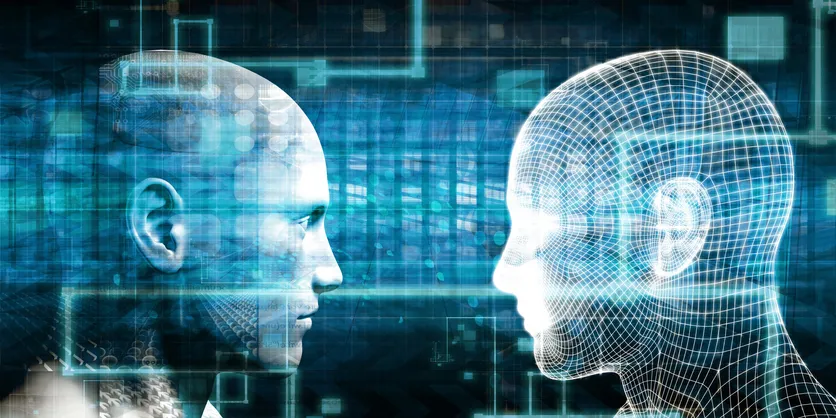
An AI memory backup (or digital mind copy) is a hypothetical or emerging technology aiming to record, preserve, and reconstruct a human’s memories, thoughts, and personality in a digital substrate.
Essentially, it seeks to:
- Capture the contents and structure of the brain,
- Store it digitally (like a neural “backup”), and
- Restore or emulate it in another medium — either biological, robotic, or virtual.
This concept sits at the intersection of:
- Neuroscience
- Artificial Intelligence
- Connectors (mapping brain connections)
- Cognitive science
- Ethics & philosophy of identity
Conceptual Layers
| Layer | Description |
|---|---|
| Memory Capture | Extracting neural data — encoding of memories and experiences |
| Neural Mapping | Understanding synaptic connections and neural firing patterns |
| Data Storage | Representing brain data in digital form |
| Simulation / Reconstruction | Running the “digital brain” in AI or neuromorphic hardware |
| Interaction / Continuity | Enabling human-like responses, personality, and continuity of consciousness |
Human Memory — Biological Foundation
To replicate memory digitally, one must understand how memory works biologically.
| Memory Type | Brain Region | Description |
|---|---|---|
| Sensory memory | Sensory cortices | Very short-lived sensory impressions |
| Short-term (working) memory | Prefrontal cortex | Temporary active information (7±2 items) |
| Long-term memory | Hippocampus (formation), neocortex (storage) | Stable encoded information |
| Procedural memory | Basal ganglia, cerebellum | Motor skills, habits |
| Emotional memory | Amygdala | Emotionally charged experiences |
Neural basis:
Memories are encoded through synaptic plasticity — changes in the strength of connections between neurons (Long-Term Potentiation / LTP).
Theoretical Basis: Whole Brain Emulation
Outlined by the Oxford Future of Humanity Institute, WBE involves replicating the functional structure of the brain in a computational medium.
Stages:
- Scan – Capture detailed 3D structure of neurons and synapses.
- Map – Create a connectome (neural wiring diagram).
- Model – Simulate neuron and synapse behavior in software.
- Emulate – Run this model on hardware to reproduce cognition.
Technologies Involved
A. Brain Imaging & Scanning
| Technique | Resolution | Purpose |
|---|---|---|
| MRI / fMRI | mm-level | Brain structure & blood flow |
| DTI (Diffusion Tensor Imaging) | mm-level | Maps white matter tracts |
| Two-photon microscopy | μm-level | Live neuron activity |
| Electron microscopy (EM) | nm-level | Synapse-level mapping |
| Cryonics + Brain Preservation | Structural preservation for later scanning | |
| Brain–Computer Interfaces (BCIs) | Real-time signal reading |
B. Neural Recording & BCIs
Non-invasive:
- EEG (Electroencephalography): measures electrical brain waves
- MEG (Magnetoencephalography): magnetic fields from neural activity
- fNIRS (functional Near-Infrared Spectroscopy): blood oxygenation changes
Invasive:
- Utah Array, Neuropixels, Neuralink threads: read/write at neuron-level resolution
- Record action potentials directly from brain tissue
Goal: decode thoughts, memories, or intentions from brain activity.
C. Memory Decoding and Encoding
Recent advances show partial memory reconstruction:
- 2023: AI models (like fMRI-to-LLM translators) reconstruct thoughts from brain scans.
- 2021: Rodent studies restored lost memories using optogenetic reactivation.
- 2018: Wake Forest team used memory prostheses that improved recall by stimulating hippocampus.
Thus, neuronal patterns of specific memories can be read and rewritten.
D. AI Modeling & Simulation
To emulate or backup a mind digitally:
- Data acquisition → neural states, firing rates, connections
- Representation → encode these as vectors or parameters
- Simulation → run on:
- Neuromorphic chips (Intel Loihi, IBM TrueNorth)
- Large-scale AI models (transformer-based brain emulators)
- Adaptive learning → simulate memory recall, emotion, personality consistency
E. Storage
Brain has ~86 billion neurons and ~100 trillion synapses.
Full neural map ≈ 1–10 petabytes (optimized encoding may reduce it to ~100 TB).
Storage medium: quantum memory, DNA storage, or advanced cloud AI memory networks.
Reconstruction: The Digital Self
Once the brain is digitally replicated, there are three possible outputs:
| Type | Description | Example |
|---|---|---|
| Digital Avatar | AI trained on brain data + memories | Chat-based or virtual representation |
| Cognitive Emulation | Full simulation of neural dynamics | “Uploaded mind” in virtual environment |
| Hybrid Augmentation | AI assists biological brain | Memory prosthetics, BCIs |
Example Scenario
- Continuous brain recording (Neuralink-like BCI).
- Data stored & compressed by AI.
- Digital twin updated regularly.
- Upon death or damage, twin re-instantiated — continuing identity in virtual space or robotic body.
Philosophical & Ethical Considerations
A. Identity & Continuity
- Is a digital copy you or just a simulation?
- Does uploading preserve consciousness or just mimic it?
B. Ownership of Data
- Who owns your neural data — you, your family, or the company?
C. Privacy & Security
- Brain backups could reveal secrets, preferences, traumas — even be hacked.
D. Death & Immortality
- If your mind can be restored digitally, what is “death”?
E. Legal Personhood
- Should digital minds have rights, citizenship, or ownership?
Key Research & Organisations
| Organization / Project | Focus |
|---|---|
| Neuralink (Elon Musk) | High-bandwidth BCIs for reading/writing neural data |
| Kernel (Bryan Johnson) | Cognitive monitoring and memory enhancement |
| Blue Brain Project (EPFL) | Simulating mammalian brain microcircuits |
| Human Connectome Project (NIH) | Mapping entire human neural wiring |
| OpenWorm | Complete emulation of a C. elegans worm brain |
| Nectome | Brain preservation for future uploading |
| 2045 Initiative | Transhumanist project for digital immortality |
| Whole Brain Emulation Roadmap (FHI, Oxford) | Long-term roadmap for mind uploading |
Current Milestones
| Year | Breakthrough | Description |
|---|---|---|
| 2011 | OpenWorm | First full connectome simulation (worm) |
| 2019 | Brain-to-text decoding | AI translated brain signals to speech |
| 2021 | Memory prosthetic (Wake Forest) | Improved recall by 35% via hippocampal stimulation |
| 2023 | Semantic brain decoding with GPT-like models | Reconstructed continuous thoughts from fMRI |
| 2025 (emerging) | Real-time thought–to–text BCIs | Paralyzed patients communicating via implants |
Future Stages Toward Full Mind Backup
| Stage | Capability | Estimated Timeframe |
|---|---|---|
| Stage 1: Digital Twin | AI model trained on user’s digital footprint | Now–2030 |
| Stage 2: Neural Recording | Partial brain activity backup | 2030–2040 |
| Stage 3: Whole Brain Emulation | Full structural + functional emulation | 2040–2070 |
| Stage 4: Conscious Continuity | Verified subjective continuity | Post-2070 (speculative) |
Potential Benefits
| Domain | Benefit |
|---|---|
| Medicine | Memory restoration, Alzheimer’s therapy |
| Education | Knowledge retrieval or skill transfer |
| Longevity | Digital immortality / backup of identity |
| AI development | Training human-like general intelligence |
| Space exploration | Upload minds for digital space travel |
| Legacy preservation | Keep human experience beyond biological death |
Risks & Concerns
| Risk | Description |
|---|---|
| Data breach / neural hacking | Mind data could be stolen or manipulated |
| Existential dissonance | Multiple copies with same identity |
| Corporate control | Monetization of consciousness |
| Technological dependency | Psychological impacts of offloading memory |
| Unethical resurrection | Restoring deceased persons without consent |
Emerging Related Concepts
- Neural Lace: mesh-like implant connecting neurons to cloud AI.
- Neural Dust: nanoscale sensors recording brain activity.
- Mind Cloning: AI copies based on text, video, voice, memories.
- Digital Afterlife: continued existence through AI avatars.
- Memory NFTs: tokenized memory units (conceptual, future idea).
Summary Table
| Dimension | Biological Brain | AI Memory Backup |
|---|---|---|
| Storage Medium | Neurons, synapses | Digital / cloud |
| Access | Limited, unconscious | Full recall, searchable |
| Durability | Decays over time | Potentially permanent |
| Copyability | Unique | Infinitely duplicable |
| Consciousness | Emergent | Debated |
| Control | Self-regulated | Programmable |
| Ethics | Organic autonomy | Data ownership issues |


Post Comment